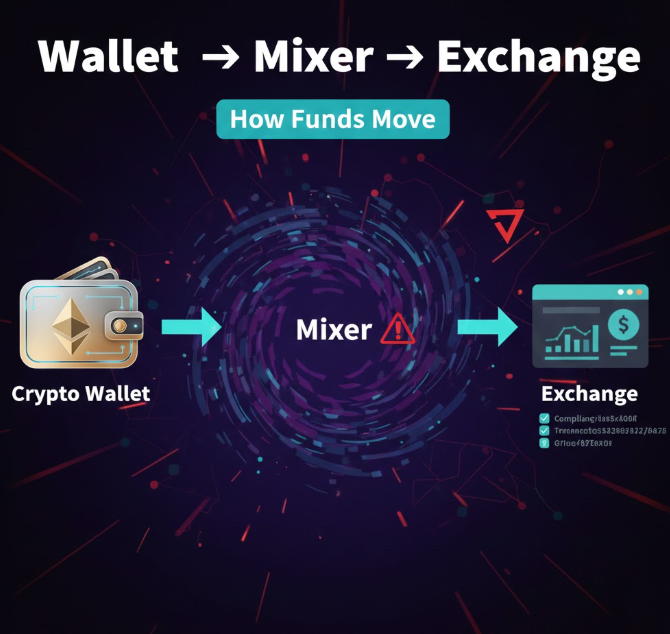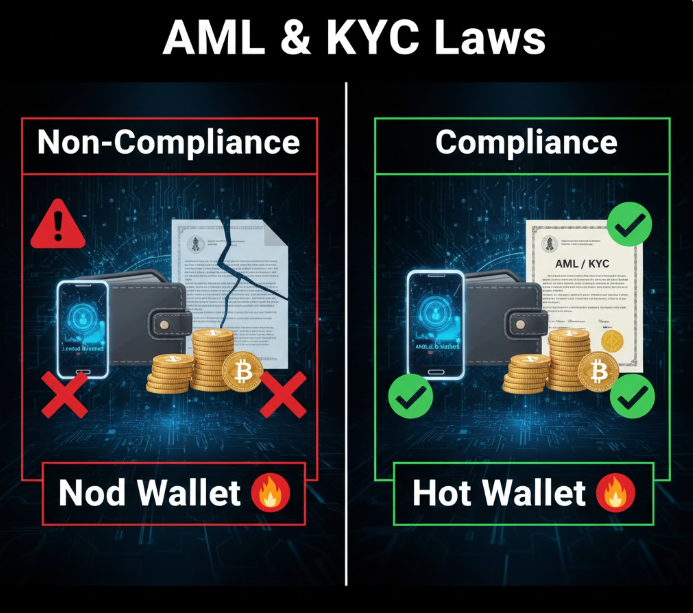
Cryptocurrency has opened new opportunities for global investors, offering fast transactions, decentralized access, and innovative financial products. However, the regulatory landscape surrounding digital assets is increasingly complex. Among the most important regulations are AML (Anti-Money Laundering) and KYC (Know Your Customer) laws, which directly impact how crypto investors operate, trade, and store their assets.
This guide explains what AML and KYC are, why they matter for crypto investors, how they are applied, and strategies to remain compliant while protecting privacy.
What Are AML and KYC?
Anti-Money Laundering (AML)
AML refers to a set of laws, regulations, and procedures aimed at preventing criminals from disguising illegal funds as legitimate assets. In the context of crypto, AML laws are designed to:
-
Detect suspicious transactions
-
Prevent funds derived from crime from entering the financial system
-
Enable regulatory oversight of digital assets
AML compliance is enforced by governments and financial authorities globally.
Know Your Customer (KYC)
KYC is a process used by financial institutions, exchanges, and crypto platforms to verify the identity of their users. It requires investors to provide personal information and documentation to prevent fraud, identity theft, and illegal activity.
Typical KYC steps include:
-
Identity verification (passport, driver’s license, national ID)
-
Proof of address (utility bills, bank statements)
-
Risk profiling and transaction monitoring
KYC complements AML by ensuring that platforms know who is sending and receiving funds.
Why AML and KYC Matter for Crypto Investors
1. Regulatory Compliance
Governments worldwide are tightening crypto regulations. Exchanges that fail to implement AML and KYC can face:
-
Fines
-
License revocation
-
Legal action
Investors using non-compliant platforms may face frozen assets or restricted access.
2. Preventing Fraud and Scams
AML and KYC requirements help reduce the risk of:
-
Fraudulent exchanges
-
Money-laundering schemes
-
Terrorist financing
By using regulated platforms, investors indirectly protect their assets.
3. Facilitating Legal Crypto Transactions
Most banks and payment processors now require AML/KYC compliance for fiat on-ramps. Without verified accounts, investors may:
-
Face delays in deposits and withdrawals
-
Be denied access to high-value transactions
-
Encounter difficulties in converting crypto to cash
4. Global Travel and Cross-Border Transfers
AML/KYC compliance allows for smoother cross-border transactions and adherence to international regulations, which is crucial for investors holding large or diversified portfolios.
How AML/KYC Affects Crypto Trading
Exchange Account Verification
Before trading, investors must:
-
Complete KYC verification
-
Link verified bank accounts
-
Provide tax identification information (in some regions)
This ensures all transactions are traceable and compliant.
Limits on Anonymous Transactions
Some exchanges enforce limits on unverified accounts, including:
-
Maximum deposit and withdrawal amounts
-
Restrictions on certain trading pairs
-
Prohibition from advanced features like futures or margin trading
Transaction Monitoring
Exchanges use automated tools to flag suspicious activity, including:
-
Large transfers
-
Unusual trading patterns
-
Repeated high-frequency trades
Investors must ensure that their transactions are legitimate and documented to avoid account freezes or reporting to regulators.
Impact on Privacy
While AML/KYC improves compliance, it also means that crypto transactions are no longer fully anonymous. Investors must balance:
-
Regulatory compliance
-
Personal privacy and security
AML and KYC Compliance for Different Crypto Platforms
| Platform Type | AML/KYC Requirement | Typical Impact on Investors |
|---|---|---|
| Centralized Exchange (CEX) | Mandatory | Full identity verification, limits on unverified accounts |
| Decentralized Exchange (DEX) | Often optional | Greater privacy, but limited fiat on/off ramps, legal risk |
| Wallet Providers | Varies | Custodial wallets may require KYC for large balances or cross-chain transfers |
| Crypto Banks / Payment Apps | Mandatory | Full compliance for deposits, withdrawals, and interest accounts |
Best Practices for Crypto Investors
1. Use Regulated Platforms
Always choose exchanges and wallet providers that comply with local AML/KYC laws. This ensures:
-
Secure deposits and withdrawals
-
Legal access to fiat gateways
-
Asset protection in case of disputes
2. Maintain Accurate Records
Keep a detailed transaction history, including:
-
Deposit/withdrawal receipts
-
Exchange trade records
-
Wallet transfers
This simplifies reporting for taxes and audits.
3. Understand Jurisdictional Rules
Crypto regulations vary by country. Investors should:
-
Review local AML and KYC laws
-
Know which exchanges are legally permitted in their region
-
Stay updated on regulatory changes
4. Limit Privacy Risks
Even when complying with KYC, investors can:
-
Use secure wallets
-
Enable two-factor authentication
-
Store sensitive information offline
5. Plan for Taxes
AML/KYC compliance often enables authorities to track taxable events. Investors should:
-
Calculate capital gains
-
Use crypto tax software
-
Report holdings and transactions accurately
Common Mistakes to Avoid
-
Using unverified exchanges for large transactions
-
Ignoring AML/KYC verification deadlines
-
Assuming decentralized platforms are exempt from local regulations
-
Failing to track transaction history
-
Reusing personal data insecurely
FAQ
Do all crypto investors need to complete KYC?
It depends on the platform. Centralized exchanges almost always require KYC, while some decentralized exchanges do not.
Can I avoid AML/KYC requirements legally?
Avoiding KYC legally is difficult if you want to use fiat on/off ramps or regulated exchanges. Non-compliance can result in blocked accounts or asset seizure.
Does KYC mean my transactions are public?
No. KYC ensures the platform knows your identity. Blockchain transactions remain pseudonymous, but authorities may request records.
How often do exchanges update KYC requirements?
Exchanges update periodically based on regulatory changes. Investors may be required to resubmit documentation.
Are AML/KYC rules the same worldwide?
No. Each country has unique rules, though most follow global recommendations like FATF (Financial Action Task Force) guidelines.
Conclusion
AML and KYC regulations are essential tools in the evolving crypto landscape. For investors, understanding these rules is not optional—it is critical to safeguarding assets, enabling legal trading, and ensuring long-term compliance.
By following best practices—using regulated exchanges, maintaining records, and staying informed—crypto investors can balance compliance, privacy, and security while participating in the global digital asset economy.