As cryptocurrency adoption grows, so does the value stored in digital wallets. For individuals and institutions holding large amounts of crypto, choosing the right storage method is not just a technical decision—it is a security strategy.
The most important question is whether to store assets in a cold wallet or a hot wallet. Each option has advantages and risks, but when large holdings are involved, security considerations become far more critical.
This guide explains how cold wallets and hot wallets work, how they differ in security, which risks apply to large holdings, and how to design a safe storage strategy.
What Is a Crypto Wallet?
A crypto wallet does not store coins directly. Instead, it stores private keys—the cryptographic keys that give access to blockchain assets.
Whoever controls the private keys controls the funds.
Wallets are classified mainly by internet connectivity, which defines their security profile.
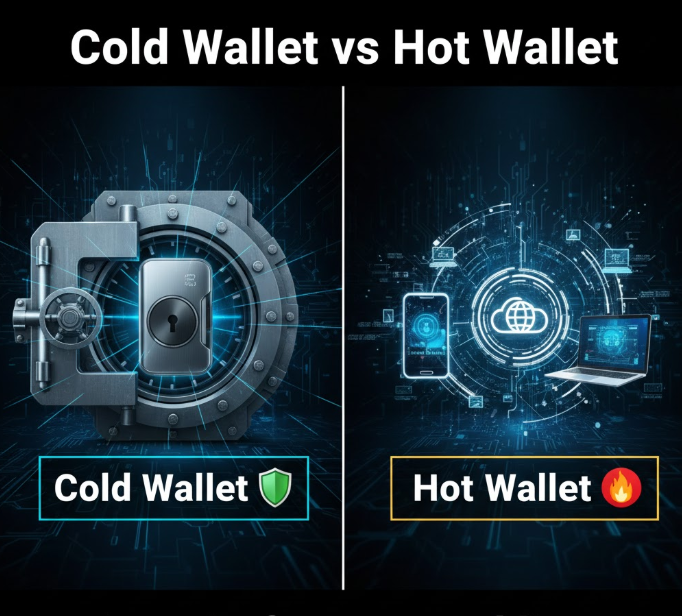
What Is a Hot Wallet?
A hot wallet is connected to the internet.
Examples include:
-
Mobile wallet apps
-
Desktop wallets
-
Web-based wallets
-
Exchange wallets
Hot wallets are designed for speed and convenience, making them ideal for frequent transactions.
Security Characteristics of Hot Wallets
Strengths
-
Quick access to funds
-
Easy integration with exchanges and apps
-
User-friendly interfaces
Weaknesses
-
Constant internet exposure
-
Vulnerable to hacking, phishing, and malware
-
Reliant on device and network security
-
Higher risk for large balances
Hot wallets are the primary target for attackers because they are online.
What Is a Cold Wallet?
A cold wallet stores private keys offline, with no direct internet connection.
Common cold wallet types include:
-
Hardware wallets
-
Air-gapped computers
-
Paper wallets
-
Institutional-grade custody devices
Cold wallets prioritize security over convenience.
Security Characteristics of Cold Wallets
Strengths
-
Offline storage eliminates remote hacking risk
-
Strong protection against malware and phishing
-
Ideal for long-term storage
-
Preferred for institutional custody
Weaknesses
-
Less convenient for frequent transactions
-
Risk of physical loss or damage
-
Requires careful backup management
Cold wallets are designed to protect wealth, not speed.
Cold Wallet vs Hot Wallet: Security Comparison
| Feature | Cold Wallet | Hot Wallet |
|---|---|---|
| Internet Access | No | Yes |
| Hacking Risk | Very Low | High |
| Malware Exposure | Minimal | Significant |
| Ease of Use | Moderate | High |
| Best for Large Holdings | Yes | No |
| Transaction Speed | Slower | Instant |
| Physical Risk | Yes | Low |
Why Large Holdings Require Stronger Security
When large amounts of cryptocurrency are involved, risks increase dramatically:
-
Targeted hacking attempts
-
Sophisticated phishing campaigns
-
Insider threats
-
Malware designed for high-value wallets
A single mistake can result in irreversible loss.
For large holders, security failures are not inconveniences—they are catastrophic events.
Hot Wallet Risks for Large Holdings
1. Online Attack Surface
Hot wallets are continuously exposed to:
-
Network attacks
-
Browser vulnerabilities
-
Compromised Wi-Fi
-
Device exploits
2. Phishing and Social Engineering
Attackers frequently target:
-
Wallet login credentials
-
Seed phrases
-
Exchange accounts
Even experienced users can fall victim.
3. Third-Party Dependency
Exchange wallets and hosted wallets rely on:
-
Platform security
-
Internal controls
-
Company solvency
History has shown that platforms can fail or be compromised.
Cold Wallet Advantages for Large Holdings
1. Offline Security
Cold wallets eliminate most remote attack vectors by keeping keys offline.
2. Reduced Exposure Time
Funds are only exposed briefly when signing transactions.
3. Strong Access Controls
Cold wallets often support:
-
PIN protection
-
Passphrases
-
Multi-signature setups
4. Institutional Compatibility
Cold wallets integrate with:
-
Custody frameworks
-
Governance policies
-
Compliance requirements
The Role of Multi-Signature Security
For large holdings, multi-signature wallets are highly recommended.
They require:
-
Multiple private keys
-
Approval from more than one party
Benefits include:
-
Protection against single-point failure
-
Reduced insider risk
-
Stronger operational control
Multi-signature cold wallets are standard in institutional crypto custody.
Best Storage Strategy for Large Holdings
Most large holders use a layered approach:
Cold Wallet for Long-Term Storage
-
Store the majority of assets offline
-
Use hardware or institutional-grade cold storage
-
Secure backups in multiple locations
Hot Wallet for Operational Funds
-
Keep small amounts for trading or daily use
-
Never store large balances online
-
Apply strong security controls
This approach balances security and usability.
Physical Security Considerations
Cold wallets introduce physical risks:
-
Loss or theft
-
Fire or water damage
-
Improper backups
Mitigation strategies:
-
Store backups in separate locations
-
Use fireproof and tamper-resistant storage
-
Maintain clear recovery procedures
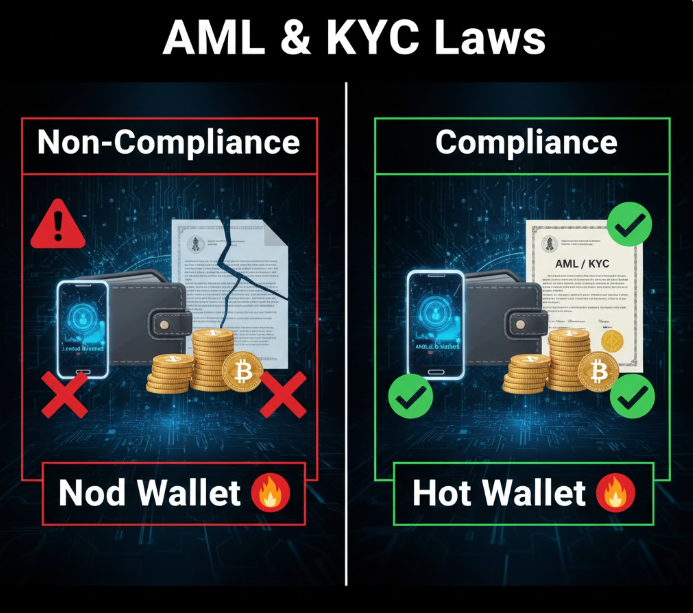
Compliance and Institutional Requirements
For enterprises and funds, cold wallets support:
-
Audit trails
-
Segregation of duties
-
Regulatory compliance
-
Insurance coverage
Hot wallets are typically limited to operational liquidity.
Common Mistakes to Avoid
-
Storing large balances in exchange wallets
-
Keeping seed phrases digitally
-
Using a single wallet for all funds
-
Ignoring physical backup security
-
Failing to test recovery procedures
FAQ
Are hot wallets ever safe for large holdings?
No. Hot wallets should only hold amounts you are willing to risk.
Can cold wallets be hacked?
Remote hacking is extremely unlikely, but physical access or poor backup practices can lead to loss.
Do institutions use hot wallets?
Yes, but only for limited operational purposes, not long-term storage.
Is hardware wallet loss fatal?
No, if proper backups are securely stored.
Should large holders use multi-signature wallets?
Yes. Multi-signature is strongly recommended for high-value holdings.
Conclusion
For large cryptocurrency holdings, cold wallets are the security standard. While hot wallets offer speed and convenience, they carry risks that are unacceptable for long-term or high-value storage.
The safest approach is not choosing one over the other—but using both strategically:
-
Cold wallets to protect wealth
-
Hot wallets for daily operations
In crypto security, offline control equals safety.