Cryptocurrency markets have grown far beyond simple buying and holding of digital assets. Today, derivative instruments such as futures, options, and perpetual contracts play a significant role in shaping market dynamics. For both retail and institutional investors, understanding how crypto derivatives influence spot prices is crucial for making informed trading decisions and managing risk.
This guide explains what crypto derivatives are, how they interact with spot markets, and their impact on liquidity, volatility, and price discovery.
Understanding Crypto Derivatives
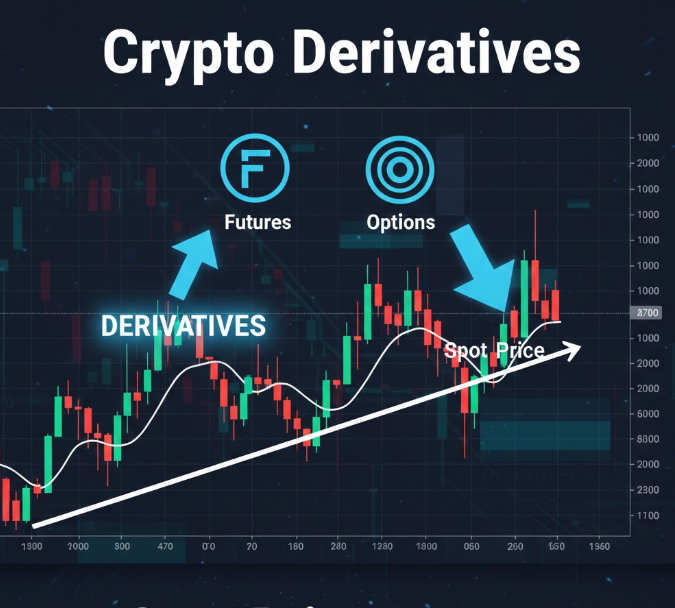
Crypto derivatives are financial contracts whose value is derived from the price of an underlying cryptocurrency. Common derivative types include:
-
Futures Contracts
Agreements to buy or sell a cryptocurrency at a predetermined price on a future date. -
Options Contracts
Contracts giving the holder the right (but not obligation) to buy or sell a cryptocurrency at a specific price before a set expiry. -
Perpetual Swaps
Derivative contracts without an expiry date that closely track spot market prices using funding rates.
How Derivatives Differ from Spot Trading
| Feature | Spot Market | Derivatives Market |
|---|---|---|
| Ownership | Direct ownership of crypto | No ownership; exposure to price movements |
| Leverage | Usually none | High leverage available |
| Settlement | Immediate | Future or perpetual |
| Risk | Price changes only | Amplified by leverage |
The Relationship Between Derivatives and Spot Prices
Crypto derivatives impact spot prices through several mechanisms:
1. Price Discovery
Derivatives provide information about market expectations. Futures and options prices reflect anticipated movements in spot prices, allowing traders to:
-
Hedge against risk
-
Speculate on future trends
-
Influence market sentiment
A high futures premium may signal bullish expectations, often impacting spot buying behavior.
2. Leverage and Market Volatility
Derivatives often allow leveraged positions, which can magnify price movements:
-
Traders taking large long positions may push spot prices higher
-
Forced liquidation of leveraged positions can trigger rapid declines
-
Volatility tends to increase around high open interest in derivatives markets
3. Arbitrage Opportunities
Arbitrageurs play a critical role in connecting spot and derivative markets:
-
If futures trade above spot prices (contango), arbitrageurs sell futures and buy spot, aligning prices
-
If futures trade below spot (backwardation), the opposite occurs
This keeps spot and derivative prices tightly linked, though temporary divergences can occur during high volatility.
4. Funding Rates and Market Sentiment
Perpetual contracts use funding rates to anchor derivative prices to spot markets:
-
Positive funding rates incentivize short positions, reducing bullish pressure on spot
-
Negative funding rates incentivize long positions, supporting spot prices
Traders monitor funding rates to gauge market sentiment and potential price direction.
5. Institutional Influence
Institutions often trade derivatives for:
-
Hedging exposure to crypto portfolios
-
Leveraging positions without holding large spot balances
-
Mitigating risk across exchanges
Large derivative flows can affect spot prices, especially in low-liquidity conditions.
Risks Introduced by Derivatives
1. Increased Volatility
High leverage and concentrated positions can cause rapid spot price swings during liquidations or market panic.
2. Market Manipulation
Derivative markets can be used to manipulate spot prices through:
-
Spoofing (placing fake orders)
-
Pumping funding rates
-
Coordinated large-scale liquidations
3. Misaligned Incentives
Traders who focus purely on derivatives may ignore spot fundamentals, potentially creating short-term price distortions.
Mitigating the Risks
-
Diversified Trading Strategy
Combine spot and derivatives exposure to balance risk and leverage. -
Monitor Open Interest
High open interest can indicate potential volatility. Track liquidation levels to anticipate market stress. -
Use Stop-Loss Orders
Protect against sudden adverse movements in leveraged derivative trades. -
Stay Informed on Funding Rates
Funding rate spikes can foreshadow corrections in the spot market.
Derivatives and Market Liquidity
Derivatives markets improve overall crypto liquidity:
-
Attract institutional investors without requiring large capital allocations in spot markets
-
Enable hedging, which reduces risk for spot traders
-
Facilitate arbitrage, keeping prices aligned across exchanges
However, excessive speculative activity can sometimes destabilize spot prices in low-volume markets.
Real-World Examples
-
Bitcoin Futures Impact on Spot
-
Futures launch on CME in December 2017 coincided with increased volatility in Bitcoin spot markets.
-
Institutional participation through futures influenced large price swings.
-
Perpetual Contracts on Binance
-
Sudden liquidations on highly leveraged perpetual contracts frequently trigger short-term spikes or dips in spot prices.
-
Ethereum Options Expiry Events
-
Large options expiries create price “pinning” effects as traders hedge or unwind positions, temporarily affecting spot prices.
FAQ
Do derivatives always influence spot prices?
Not always. Spot markets are influenced by demand and supply, but derivatives can amplify trends, especially during high leverage periods.
Can derivative trading lead to market manipulation?
Yes. Improper use of derivatives, combined with low liquidity, can distort spot prices. Regulatory oversight and exchange safeguards help mitigate this.
Are derivatives suitable for retail investors?
Leverage and complexity make derivatives high-risk for inexperienced traders. Spot trading is safer for most retail investors.
How do futures contracts impact crypto volatility?
High futures volumes, leveraged positions, and expiries can increase volatility, impacting short-term spot prices.
Can arbitrage eliminate spot-derivative price gaps?
Yes. Arbitrageurs act to align prices, but gaps can persist temporarily in volatile conditions.
Conclusion
Crypto derivatives play a critical role in shaping spot prices, providing liquidity, facilitating hedging, and enabling institutional participation. While they enhance market efficiency and price discovery, they also introduce volatility, leverage risk, and short-term price distortions.
For traders and investors, understanding how derivatives interact with spot markets is essential for making informed decisions, managing risk, and navigating the rapidly evolving crypto ecosystem.