Cryptocurrency is often described as decentralized and permissionless but that doesn’t mean crypto wallets are immune to restrictions. One situation that surprises many users is when a crypto wallet gets blacklisted.
If you’ve ever heard of wallets being frozen, flagged, or blocked, you might wonder:
What does wallet blacklisting actually mean, who does it, and what happens to your funds?
This article explains everything in plain language no hype, no fear-mongering, just how wallet blacklisting works in the real world.
What Does “Blacklisting” a Crypto Wallet Mean?
A blacklisted crypto wallet is an address that has been flagged as high-risk or prohibited by certain platforms, services, or smart contracts.
When a wallet is blacklisted:
-
Exchanges may refuse deposits or withdrawals
-
DeFi platforms may block interactions
-
Funds may become difficult or impossible to move through regulated services
Importantly, blacklisting does not always mean your crypto is destroyed. In many cases, the funds still exist on the blockchain, but access is restricted by third parties.
Who Can Blacklist a Crypto Wallet?
Not everyone has the power to blacklist wallets. Here’s who actually can:
1. Centralized Exchanges (CEXs)
Exchanges like Binance, Coinbase, or Kraken can blacklist wallets within their platforms.
They may block:
-
Deposits from a blacklisted address
-
Withdrawals to that address
-
Account access tied to that wallet
This is the most common form of wallet blacklisting.
2. Blockchain Analytics & Compliance Firms
Companies like Chainalysis, TRM Labs, and Elliptic do not blacklist wallets directly, but they:
-
Label wallets as risky
-
Share data with exchanges, banks, and regulators
-
Influence platform-level restrictions
Their reports often trigger blacklisting actions.
3. Smart Contracts (Token-Level Blacklisting)
Some tokens especially stablecoins are controlled by smart contracts that allow issuers to blacklist addresses.
Examples:
-
USDT (Tether)
-
USDC (Circle)
-
Some regulated DeFi tokens
In these cases:
-
The token issuer can freeze or block funds
-
Transfers from blacklisted addresses are rejected
4. Governments & Regulators (Indirectly)
Governments cannot directly alter blockchains, but they can:
-
Order exchanges to block certain wallets
-
Sanction addresses via legal frameworks
-
Enforce compliance through financial institutions
A well-known example is OFAC-sanctioned crypto addresses.
Common Reasons a Wallet Gets Blacklisted
Wallets are usually blacklisted due to association, not always intent.
1. Connection to Illegal Activity
This includes:
-
Hacks or exploits
-
Ransomware payments
-
Dark web marketplaces
-
Fraud or scam proceeds
Even receiving funds indirectly can raise red flags.
2. Interaction With Sanctioned Addresses
If your wallet:
-
Receives funds from a sanctioned address
-
Sends funds to one
-
Interacts with blacklisted smart contracts
It may be flagged even if you didn’t know.
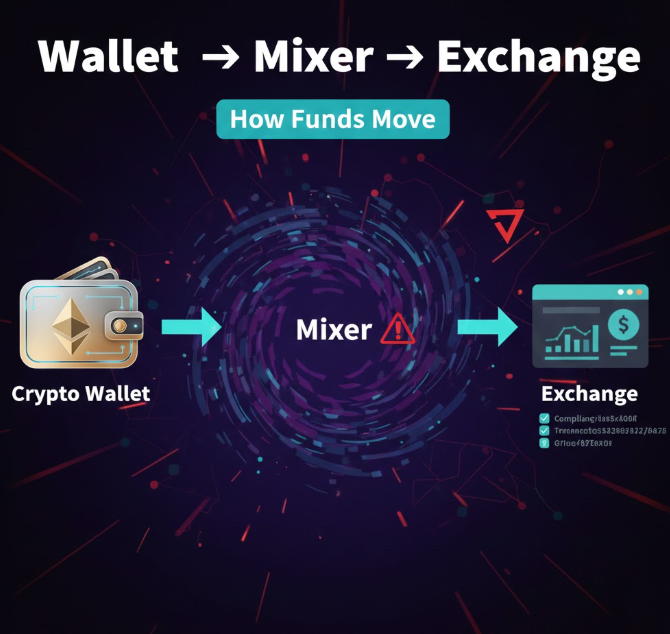
3. Use of Mixing or Privacy Tools
Using services like:
-
Crypto mixers
-
Tornado-style privacy protocols
can increase scrutiny, especially on regulated platforms.
4. Exchange Compliance Violations
Exchanges may blacklist wallets due to:
-
KYC violations
-
Suspicious transaction patterns
-
Terms-of-service breaches
What Happens to Your Funds When a Wallet Is Blacklisted?
This depends on where and how the blacklisting occurs.
Scenario 1: Wallet Blacklisted by an Exchange
-
Funds on the blockchain still exist
-
Exchange refuses to accept or release them
-
You may be asked to provide documentation
-
Account may be frozen during investigation
In some cases, funds can be recovered after compliance checks.
Scenario 2: Token Issuer Freezes the Wallet
This is more serious.
-
Tokens like USDT or USDC may become untransferable
-
You cannot send or use those tokens
-
The issuer controls the smart contract
The blockchain still records the balance, but it’s effectively locked.
Scenario 3: DeFi Platforms Block Access
-
Smart contracts deny interaction
-
Swaps, staking, or lending fail
-
Wallet remains functional elsewhere
This is common with DeFi platforms enforcing compliance rules.
Can a Blacklisted Wallet Still Send Crypto?
Sometimes, yes but with limits.
-
Native assets (like ETH or BTC) may still move
-
Regulated tokens may not
-
Centralized services may reject transactions
-
On-chain transfers may succeed but become unusable later
The wallet isn’t “deleted” it’s restricted by gateways.
Can a Wallet Be Removed from a Blacklist?
Yes, but it’s not guaranteed.
Possible Ways:
-
Contact the exchange or platform
-
Provide source-of-funds documentation
-
Prove no involvement in illegal activity
-
Wait for investigation results
Token-issuer freezes are harder to reverse and depend entirely on issuer policy.
Does Wallet Blacklisting Break Decentralization?
Not exactly but it highlights reality.
Blockchains themselves remain decentralized.
Access points are not.
-
Exchanges
-
Stablecoin issuers
-
DeFi frontends
These layers introduce control and compliance.
Decentralization protects ledger integrity, not unrestricted usage.
How to Reduce the Risk of Wallet Blacklisting
You can’t eliminate risk entirely, but you can reduce it.
Best Practices:
-
Avoid interacting with unknown addresses
-
Be cautious with airdrops from unknown sources
-
Use reputable exchanges and DeFi platforms
-
Track wallet interactions using blockchain explorers
-
Separate wallets for different activities
-
Avoid receiving funds from suspicious sources
Frequently Asked Questions (FAQ)
Is wallet blacklisting permanent?
Not always. Some cases are temporary, others permanent—depending on the reason.
Can governments seize blacklisted crypto?
Governments don’t seize directly on-chain, but they can enforce control through exchanges and issuers.
Does using a hardware wallet prevent blacklisting?
No. Wallet type doesn’t matter address history does.
Can I just create a new wallet?
You can, but moving tainted funds may still be flagged on exchanges.
Is Bitcoin affected by blacklisting?
Bitcoin itself isn’t censored, but services interacting with Bitcoin are.
Final Thoughts
When a crypto wallet is blacklisted, the blockchain doesn’t erase your funds—but your ability to use them becomes restricted. Blacklisting happens at the service, exchange, or token level, not at the core protocol level.
Understanding how and why wallets get blacklisted helps you:
-
Avoid unnecessary risk
-
Protect your funds
-
Navigate crypto responsibly
Crypto offers freedom but responsibility and awareness are part of the deal.