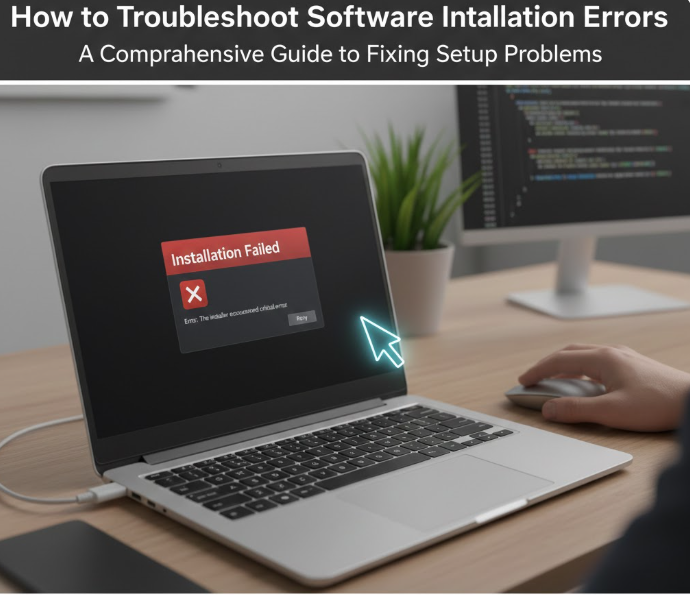
Installing software on your computer should be straightforward, but sometimes things go wrong. Software installation errors can prevent programs from being installed, updated, or launched, causing frustration and loss of productivity. These issues occur on both Windows and macOS, across desktops and laptops, and can affect everything from productivity apps to games.
This guide explains why software installation errors occur, how to identify the cause, and provides step-by-step troubleshooting solutions. We also cover preventive measures to minimize future errors.
Understanding Software Installation Errors
A software installation error occurs when the installation process cannot complete successfully. Common signs include:
-
Error messages during installation (e.g., “Setup failed” or “Installation cannot continue”)
-
Program does not appear in the Applications/Programs list
-
Crashes during installation
-
Missing or corrupted files after installation
-
Conflicts with existing software
Errors may vary based on operating system, program type, or user permissions, but most can be resolved using systematic troubleshooting.
Common Causes of Software Installation Errors
Before attempting fixes, it helps to understand the underlying causes.
1. Insufficient System Resources
-
Low disk space can prevent installation
-
Insufficient RAM or CPU capacity may interrupt setup
2. Lack of Administrative Privileges
Some programs require administrator rights to install files or modify system settings.
3. Corrupted Installation Files
-
Partial downloads or corrupted installers cause failures
-
Damaged storage devices may lead to file corruption
4. Conflicting Software
-
Antivirus or firewall blocking installation
-
Existing software conflicting with the new program
5. Outdated Operating System or Drivers
-
OS updates often include libraries or frameworks required by software
-
Outdated drivers (graphics, audio, etc.) can prevent installation
6. Missing Dependencies
Some software relies on libraries like .NET Framework, Java, or Visual C++ Redistributables. Missing dependencies cause installation failures.
7. Network Issues
Online installers need stable internet. Poor connections can result in failed downloads.
8. Disk Errors or Permission Problems
-
Corrupted hard drives or SSDs may block file creation
-
Folder permissions may prevent writing installation files
9. Software Installation Path Issues
-
Special characters or very long paths can prevent installation
-
Lack of write permissions in the chosen folder
Step 1: Check System Requirements
Before installing any software:
-
Review the program’s minimum and recommended requirements
-
Check OS version, CPU, RAM, and available disk space
-
Confirm you meet all requirements before proceeding
Tip: Installing software on incompatible systems is a common cause of errors.
Step 2: Free Up Disk Space
Many installation failures occur due to insufficient storage.
Steps:
-
Open File Explorer (Windows) or Finder (macOS)
-
Check available disk space on the drive where the software will be installed
-
Delete unnecessary files, temporary files, or old downloads
-
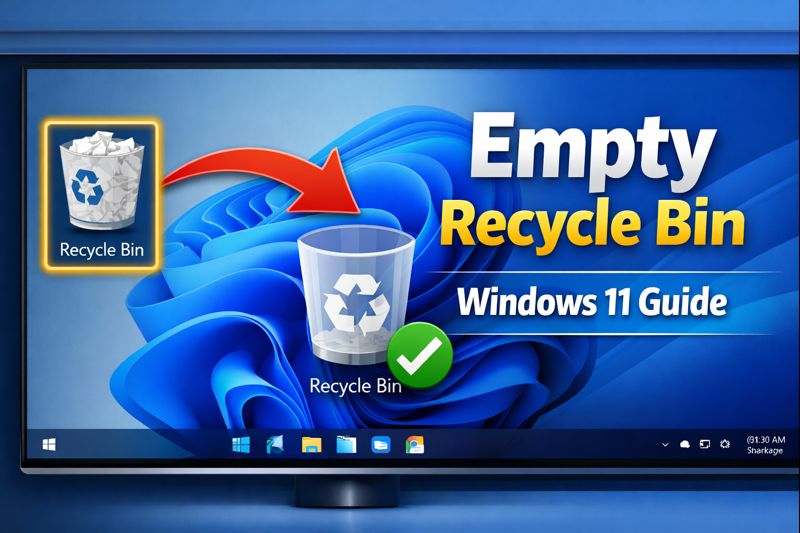
Empty Recycle Bin or Trash
Tip: Keep at least 10–15% of free storage for smooth installation and program operation.
Step 3: Run Installer as Administrator
Many programs need elevated privileges to modify system files.
Windows:
-
Right-click the installer file
-
Select Run as administrator
-
Follow prompts to complete installation
macOS:
-
Enter your admin password when prompted during installation
Tip: Running as administrator often resolves permission-related errors.
Step 4: Verify Installer Integrity
Corrupted installation files are a major cause of errors.
Steps:
-
Re-download the installer from the official website
-
Verify file size matches the website specifications
-
For ZIP or EXE installers, use hash checks (MD5/SHA256) if available
Tip: Avoid downloading software from unverified sources to prevent malware and corrupted files.
Step 5: Temporarily Disable Antivirus or Firewall
Security software may block installation of legitimate programs.
Steps:
-
Disable antivirus or firewall temporarily
-
Install the software
-
Re-enable security software after installation
Warning: Only disable security software temporarily and never install unknown software.
Step 6: Close Conflicting Applications
Other running programs may interfere with installation.
-
Close browsers, background apps, or software using the same resources
-
Open Task Manager (Windows) or Activity Monitor (Mac) to terminate background processes
Tip: Especially important for game installers or software that modifies system files.
Step 7: Update Operating System
Many installations fail due to missing system updates.
Windows:
-
Go to Settings > Update & Security > Windows Update
-
Install all available updates
-
Restart PC
macOS:
-
Go to System Settings > Software Update
-
Install updates
-
Restart computer
Tip: Updated systems often include essential libraries or frameworks.
Step 8: Install Required Dependencies
Some programs require additional frameworks:
-
.NET Framework (Windows)
-
Visual C++ Redistributables (Windows)
-
Java Runtime Environment (JRE)
-
Apple Rosetta 2 (Mac M1/M2)
Install missing dependencies before proceeding with the main software.
Step 9: Clear Temporary Files
Old temporary files may interfere with installation.
Windows:
-
Press Windows + R, type
%temp%, press Enter -
Delete all files in the folder
-
Empty Recycle Bin
macOS:
-
Open Finder > Go > Go to Folder
-
Enter
/Library/Cachesand delete unnecessary cache files -
Restart system
Step 10: Check Installation Path
Long paths or special characters can prevent installation.
-
Avoid non-English characters, symbols, or very long folder names
-
Install in a simple path like
C:\Program Files\AppName
Tip: Some programs cannot handle paths over 255 characters.
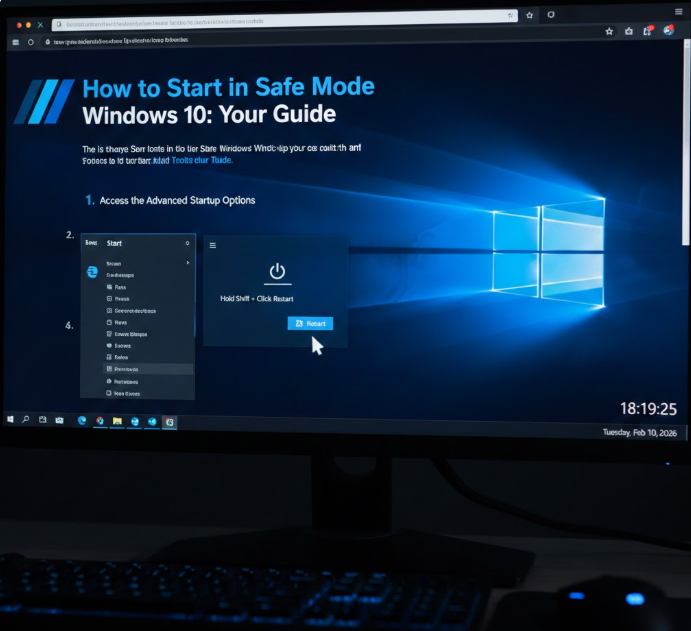
Step 11: Use Safe Mode (Windows)
Safe Mode allows installation with minimal processes running.
Steps:
-
Press Windows + R, type
msconfig -
Go to Boot > Safe Boot
-
Restart PC into Safe Mode
-
Run installer
-
Restart normally after installation
Tip: Safe Mode bypasses some software conflicts.
Step 12: Check Disk for Errors
Disk corruption can block installation.
Windows:
-
Open Command Prompt as Administrator
-
Run
chkdsk C: /f /r -
Restart PC
macOS:
-
Open Disk Utility
-
Select your drive > Click First Aid
-
Repair disk if errors are found
Step 13: Use Compatibility Mode (Windows)
Older software may not install on newer Windows versions.
-
Right-click installer
-
Select Properties > Compatibility
-
Enable Run this program in compatibility mode
-
Choose the previous Windows version
Step 14: Check Internet Connection (Online Installers)
Some software requires downloading additional files during installation.
-
Ensure a stable Wi-Fi or wired connection
-
Disable VPN temporarily
-
Retry installation
Tip: Interrupted downloads often cause corrupt installations.
Step 15: Uninstall Previous Versions
Conflicting old versions may prevent installation.
-
Uninstall previous or trial versions
-
Delete leftover folders in Program Files or Applications
-
Restart PC and retry installation
Step 16: Use Alternative Installer
Some software offers multiple formats:
-
Full offline installer vs. online installer
-
ZIP or DMG installer
-
Portable versions
Try a different version if the standard installer fails.
Step 17: Check Permissions on Installation Drive
Your account must have write permissions on the target drive.
-
Windows: Right-click drive > Properties > Security > Ensure user has Full Control
-
macOS: Get Info > Sharing & Permissions > Check privileges
Step 18: Contact Software Support
If all else fails:
-
Provide OS version, installer type, and error messages
-
Check FAQ or forums for known issues
-
Some companies offer remote installation assistance
Tip: Screenshots of error messages accelerate support response.
Step 19: Prevent Future Installation Errors
-
Keep OS and drivers updated
-
Use official installers only
-
Backup system before major installations
-
Avoid installing software during heavy system load
-
Maintain sufficient disk space and RAM
Frequently Asked Questions (FAQ)
Why do installations fail even with enough space?
Corrupt installer, missing dependencies, or antivirus interference are common causes.
How do I know if an installer is corrupted?
Compare file size and hash with official sources; try re-downloading.
Can Safe Mode fix installation errors?
Yes, it reduces conflicts by disabling unnecessary processes.
Why do some apps require admin rights?
They need permission to write system files or modify the registry.
How can I fix persistent “Installation failed” errors?
Check disk health, permissions, dependencies, and try alternate installers.
Step 20: Advanced Troubleshooting (Optional)
a. Use Logs to Identify Errors
-
Windows: Installer logs (MSI logs or Event Viewer)
-
macOS: Console app for installation logs
b. Disable User Account Control (Windows)
Temporarily lower UAC settings if installation fails due to permission errors.
c. Reinstall Windows or macOS (Last Resort)
Only recommended if multiple installations fail due to system corruption.
Conclusion
Software installation errors can be caused by system requirements, corrupted files, conflicts, missing dependencies, or permissions issues. By following this comprehensive guide, you can:
-
Diagnose the root cause of installation failures
-
Restore proper installation processes
-
Avoid future errors
-
Improve overall system stability
Start with basic fixes like checking system requirements, freeing up disk space, and running the installer as administrator. Then proceed to advanced solutions like safe mode, disk repair, or contacting support if necessary. With a systematic approach, software installation errors can be resolved efficiently and safely.