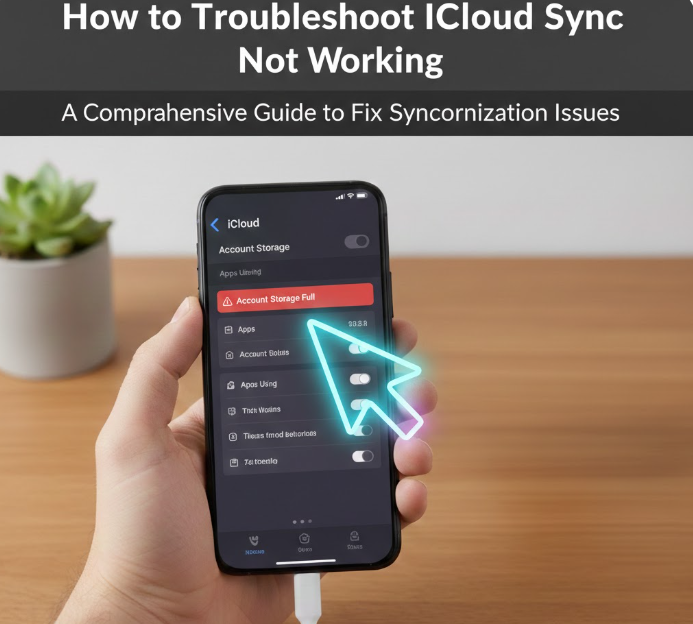
iCloud is Apple’s cloud storage service, designed to sync your photos, contacts, emails, calendars, notes, and app data across iPhones, iPads, and Macs. While it usually works seamlessly, sometimes iCloud sync stops working, leaving your data out of date or missing across devices.
This comprehensive guide explains why iCloud sync fails, how to diagnose the issue, and step-by-step solutions to get your iCloud working properly on iOS, iPadOS, and macOS.
Common Signs of iCloud Sync Not Working
You may notice iCloud sync issues when:
-
Changes made on one device do not appear on others
-
iCloud photos are not updating
-
Contacts or calendars fail to sync
-
Notes, reminders, or documents are missing
-
iCloud backup fails repeatedly
-
Apps report “Unable to connect to iCloud”
Recognizing these symptoms helps target the right solution.
Common Causes of iCloud Sync Problems
Understanding why iCloud stops syncing helps in troubleshooting.
1. Poor Internet Connection
iCloud requires a stable Wi-Fi or cellular connection.
2. Outdated iOS or macOS
Older software versions can cause compatibility issues.
3. Insufficient iCloud Storage
If your iCloud account is full, new data cannot sync.
4. Incorrect Apple ID
Using different Apple IDs on devices prevents sync.
5. Disabled iCloud Settings
iCloud services may be turned off accidentally for certain apps.
6. Temporary Apple Server Issues
iCloud servers sometimes experience outages.
7. Software Bugs or Glitches
Minor system glitches may prevent proper syncing.
8. Device Time and Date Settings
Incorrect device time may interfere with syncing.
Step 1: Check iCloud System Status
Sometimes the problem isn’t on your device.
Steps:
-
Visit Apple’s System Status page
-
Look for iCloud services (e.g., iCloud Drive, Contacts, Photos)
-
If services show downtime, wait until Apple resolves the issue
Tip: You can follow Apple’s status page on Twitter for updates.
Step 2: Check Internet Connection
A weak or unstable connection is a common cause.
Steps:
-
Ensure Wi-Fi is connected and strong
-
Disable VPNs temporarily
-
Test loading a website or streaming video
-
Restart your router if needed
Tip: For large iCloud uploads, Wi-Fi is preferred over cellular.
Step 3: Confirm Apple ID and iCloud Login
iCloud requires the same Apple ID across devices.
Steps:
-
Open Settings > [Your Name]
-
Confirm Apple ID email
-
Sign out and sign back in if necessary
Tip: Signing out may temporarily remove iCloud data from the device. Make sure everything is backed up.
Step 4: Check iCloud Storage
A full iCloud account prevents new data from syncing.
Steps:
-
Open Settings > [Your Name] > iCloud > Manage Storage
-
Check available storage
-
Delete unnecessary backups, files, or emails
-
Consider upgrading your storage plan if needed
Step 5: Ensure iCloud Sync Is Enabled for Apps
Sometimes individual apps are not syncing.
Steps:
-
Go to Settings > [Your Name] > iCloud
-
Ensure toggles are on for Photos, Contacts, Calendars, Notes, etc.
-
Open the app to confirm sync is active
Step 6: Restart Your Device
A simple restart often resolves minor software glitches.
Steps:
-
Power off your iPhone, iPad, or Mac
-
Wait 30 seconds
-
Turn it back on and check iCloud sync
Step 7: Sign Out and Sign Back Into iCloud
Refreshing the connection can fix persistent issues.
Steps:
-
Go to Settings > [Your Name] > Sign Out
-
Follow prompts to keep local copies of data
-
Sign back in using the same Apple ID
-
Wait a few minutes for iCloud to resync
Tip: This often fixes stubborn sync errors.
Step 8: Check Date and Time Settings
Incorrect date/time can prevent iCloud from syncing.
Steps:
-
Open Settings > General > Date & Time
-
Enable Set Automatically
-
Restart the device and check sync
Step 9: Update iOS, iPadOS, or macOS
Outdated software can cause iCloud errors.
Steps:
-
Go to Settings > General > Software Update
-
Install available updates
-
Restart your device
Tip: On Mac, go to System Preferences > Software Update.
Step 10: Reset Network Settings
Network configuration errors can block iCloud connectivity.
Steps:
-
Go to Settings > General > Reset > Reset Network Settings
-
Reconnect to Wi-Fi
-
Test iCloud sync
Note: This deletes saved Wi-Fi passwords and VPN configurations.
Step 11: Force Sync iCloud Data
For apps like Contacts or Calendars:
Steps:
-
Turn off iCloud sync for the app
-
Wait 10–15 seconds
-
Turn iCloud sync back on
-
Check if the data updates across devices
Step 12: Check for App-Specific Issues
Some apps may fail to sync independently.
-
Photos: Open Photos app > Ensure “iCloud Photos” is enabled
-
Contacts/Calendars: Refresh app or toggle sync
-
Notes: Check default account is iCloud, not local or Gmail
Step 13: Free Up Local Storage
Sometimes iCloud sync fails because the device lacks enough free space.
-
Delete unnecessary apps or files
-
Clear cached data
-
Ensure at least 1–2 GB of free storage for smooth syncing
Step 14: Disable VPN or Firewall (Mac)
If using VPN or firewall, it may block iCloud connections.
-
Temporarily disable VPN
-
Ensure firewall allows connections to iCloud servers
-
Test sync again
Step 15: Contact Apple Support
If all troubleshooting fails:
-
Visit Apple Support website
-
Use Chat, Call, or Genius Bar appointment
-
Provide details of device, iOS version, and steps tried
Tip: Apple can help check server-side issues or account problems.
Tips to Prevent Future iCloud Sync Issues
-
Always use a stable Wi-Fi network
-
Keep devices updated to the latest software
-
Monitor iCloud storage regularly
-
Use the same Apple ID on all devices
-
Backup important data before making changes
-
Avoid conflicting third-party apps that modify iCloud data
Frequently Asked Questions (FAQ)
Why is iCloud not syncing between my iPhone and Mac?
Possible causes include different Apple IDs, network issues, or outdated macOS/iOS.
Why are some photos missing in iCloud?
Check iCloud Photos toggle, ensure sufficient storage, and verify that photo upload is complete.
Can I fix iCloud sync by restarting my device?
Yes, restarting often resolves minor glitches and forces a resync.
Why does iCloud say “Updating…” but never finishes?
This can happen due to slow internet, large uploads, or full iCloud storage.
Is it safe to sign out of iCloud to fix sync issues?
Yes, as long as you keep local copies of your data when prompted.
When to Seek Professional Help
Contact Apple Support if:
-
iCloud sync fails on multiple devices
-
Data is missing or inaccessible
-
Account or server issues are suspected
-
Errors persist despite software updates and troubleshooting
Conclusion
iCloud sync problems can be frustrating, but most issues are caused by network errors, storage limitations, or software glitches, not permanent device damage. By following this step-by-step troubleshooting guide, you can:
-
Restore proper iCloud sync across devices
-
Ensure photos, contacts, and files are up to date
-
Prevent future syncing problems
-
Optimize your iCloud storage for smoother performance
Start with basic checks, then move to advanced fixes if necessary. With proper management, iCloud can reliably keep all your devices in sync.