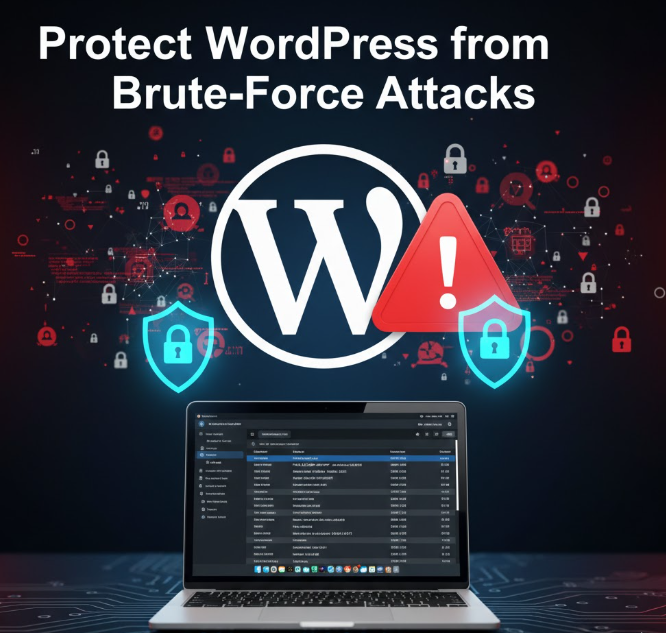
WordPress powers over 40% of websites worldwide, making it a frequent target for hackers. One of the most common attacks is a brute-force attack, where attackers use automated scripts to guess your login credentials until they succeed. If you don’t protect your site, a successful attack could result in data theft, malware infection, or complete site takeover.
This guide explains what brute-force attacks are, why WordPress is vulnerable, and step-by-step strategies to protect your website.
What is a Brute-Force Attack?
A brute-force attack is a trial-and-error method hackers use to crack passwords. Automated tools can try thousands of username and password combinations every minute until they gain access to your WordPress dashboard.
How it Works:
-
Hackers scan for WordPress login pages (
/wp-login.php). -
They use software to try many common username and password combinations.
-
Once they succeed, they can install malware, delete content, or steal sensitive data.
Why WordPress is Vulnerable
-
Popularity: Hackers target WordPress because of its large user base.
-
Weak Passwords: Many site owners use simple passwords like
123456orpassword. -
Default Username: Using
adminas your username makes it easier for attackers. -
Unprotected Login Page: Default WordPress login URLs are known to hackers.
-
Outdated Software: Old WordPress versions, themes, or plugins may have security vulnerabilities.
Step 1: Use Strong Passwords and Unique Usernames
-
Avoid easy passwords. Use a combination of uppercase, lowercase, numbers, and symbols.
-
Change the default
adminusername to something unique. -
Use a password manager like LastPass, 1Password, or Bitwarden to generate and store strong passwords.
Example of a strong password: G9#kL2$wP@x8!
Step 2: Limit Login Attempts
By default, WordPress allows unlimited login attempts, which makes brute-force attacks easier. You can limit attempts using plugins:
-
Wordfence Security: Limits login attempts and blocks suspicious IP addresses.
-
Login LockDown: Records failed login attempts and temporarily locks out IPs.
-
iThemes Security: Allows you to set maximum login attempts and block attackers.
Tip: After 3–5 failed attempts, block the IP for a set time to reduce hacking risk.
Step 3: Enable Two-Factor Authentication (2FA)
2FA adds an extra layer of security beyond passwords:
-
Requires a one-time code sent to your phone or email after entering the password.
-
Recommended plugins: Google Authenticator, Wordfence, or Duo Security.
-
Even if a hacker guesses your password, they won’t access your account without the 2FA code.
Step 4: Change the Default Login URL
Hackers often target the default /wp-login.php page. Changing it can reduce attacks:
-
Use plugins like WPS Hide Login or iThemes Security to create a custom login URL.
-
Example:
yourwebsite.com/custom-logininstead of the default.
Tip: Avoid common alternatives like /login or /admin — hackers often try these too.
Step 5: Keep WordPress, Themes, and Plugins Updated
-
Hackers exploit outdated software.
-
Regularly update WordPress core, plugins, and themes.
-
Remove unused plugins and themes to reduce vulnerabilities.
Tip: Enable automatic updates for minor releases and security patches.
Step 6: Implement a Web Application Firewall (WAF)
A firewall blocks malicious traffic before it reaches your website:
-
Cloudflare: Protects your site from brute-force attacks and DDoS attacks.
-
Sucuri Firewall: Adds a cloud-based security layer with login protection.
-
Wordfence Firewall: Installed on your WordPress site, filtering malicious traffic.
A WAF adds an extra barrier between hackers and your login page.
Step 7: Monitor Login Activity
Regular monitoring helps detect suspicious activity early:
-
Use Wordfence or Activity Log plugin to track login attempts.
-
Set alerts for failed login attempts or logins from unusual IPs.
-
Investigate any unexpected access immediately.
Step 8: Block Malicious IPs
If you notice repeated failed login attempts from certain IP addresses:
-
Block them temporarily or permanently using security plugins.
-
Use your hosting control panel or firewall for global IP blocking.
-
For advanced users, configure
.htaccessto restrict access to/wp-login.phpby IP.
Step 9: Regular Backups
Even with strong security, breaches can happen. Regular backups ensure you can restore your site:
-
Use plugins like UpdraftPlus, BackupBuddy, or Jetpack.
-
Schedule daily or weekly backups depending on site activity.
-
Store backups offsite (Google Drive, Dropbox, or external servers).
Step 10: Educate Users and Administrators
If multiple people have access to your WordPress dashboard:
-
Train them on creating strong passwords and using 2FA.
-
Limit admin access to only essential users.
-
Use role management to assign only the permissions necessary.
Additional Tips for Extra Protection
-
Disable file editing in the WordPress dashboard (
wp-config.php). -
Change database table prefix from
wp_to something unique. -
Use SSL (HTTPS) to encrypt login credentials during transmission.
-
Monitor security logs regularly for unusual behavior.
FAQ
What is a brute-force attack?
It’s an automated method hackers use to guess usernames and passwords to gain access to your site.
Can strong passwords alone prevent brute-force attacks?
Strong passwords help, but combining them with 2FA, limited login attempts, and a firewall offers the best protection.
Are plugins enough to secure WordPress?
Plugins help, but security is multi-layered. Updating WordPress, using 2FA, and monitoring logs are equally important.
How do I know if my site is under attack?
Signs include multiple failed login notifications, slow website performance, or sudden lockouts.
Can my hosting provider help?
Yes. Many hosting providers offer security support and firewalls to protect against brute-force attacks.
Conclusion
Brute-force attacks are a common threat to WordPress websites, but they are preventable with the right strategies. By combining strong passwords, 2FA, limited login attempts, firewalls, regular updates, and backups, you can secure your site against attacks.
WordPress security isn’t just about protection it’s about peace of mind, knowing your content and business are safe. Following these steps in 2026 will keep your website fast, secure, and resilient against hackers.