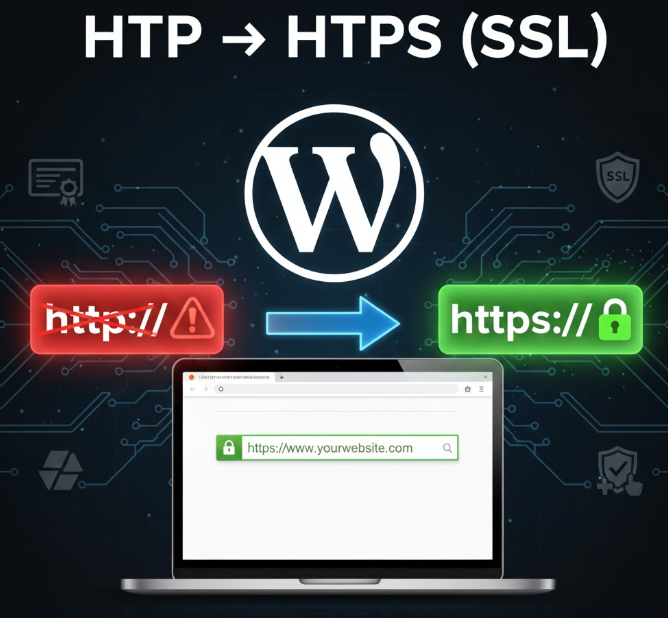
If your WordPress website is still using HTTP, you’re missing out on security, trust, and performance benefits. Modern browsers now warn visitors when a site is “Not Secure,” and that alone can scare users away.
Moving WordPress from HTTP to HTTPS is no longer optional — it’s a basic requirement in 2026.
The good news? The process is safe and straightforward when done correctly.
This guide explains what HTTPS is, why it matters, and walks you through a step-by-step method to switch your WordPress site from HTTP to HTTPS without breaking anything.
What Is HTTPS and Why It Matters
HTTP vs HTTPS (Simple Explanation)
-
HTTP sends data in plain text
-
HTTPS encrypts data using SSL/TLS
This means HTTPS protects:
-
Login credentials
-
Contact forms
-
Payment data
-
User information
Benefits of HTTPS for WordPress
-
Improved website security
-
Browser “Secure” padlock icon
-
Better SEO and user trust
-
Protection against data interception
-
Required for modern features like HTTP/2
Before You Start: Important Checklist
Before switching to HTTPS, make sure you have:
-
Access to your hosting control panel
-
A backup of your website (files + database)
-
Ability to log in to WordPress admin
Backing up ensures you can restore your site if something goes wrong.
Step 1: Install an SSL Certificate
An SSL certificate enables HTTPS on your domain.
Option 1: Free SSL (Recommended)
Most hosting providers offer free SSL certificates:
-
Let’s Encrypt
-
AutoSSL
-
Cloudflare SSL
Steps (general):
-
Log in to your hosting dashboard
-
Find SSL/TLS or Security section
-
Enable SSL for your domain
-
Wait for activation (usually instant)
Option 2: Paid SSL Certificate
Useful for enterprise or ecommerce sites, but not required for most WordPress websites.
Step 2: Update WordPress Site URLs
Once SSL is active, update WordPress to use HTTPS.
Steps:
-
Log in to WordPress admin
-
Go to Settings → General
-
Change:
-
WordPress Address (URL) →
https://yourdomain.com -
Site Address (URL) →
https://yourdomain.com
-
-
Click Save Changes
You’ll be logged out automatically. Log back in using HTTPS.
Step 3: Force HTTPS Using Redirects
Redirecting ensures all visitors and search engines use HTTPS.
Option A: Using .htaccess (Apache Servers)
Add this code above # BEGIN WordPress:
Option B: Using a Plugin (Beginner Friendly)
Popular plugins:
-
Really Simple SSL
-
WP Force SSL
These plugins automatically:
-
Fix redirects
-
Update URLs
-
Handle mixed content
Step 4: Fix Mixed Content Warnings
Mixed content happens when HTTPS pages load HTTP resources (images, scripts).
How to Fix It
Option 1: Plugin Method
Use:
-
Really Simple SSL
-
Better Search Replace
These tools scan and replace http:// with https://.
Option 2: Manual Database Fix
Use a search-replace tool in your hosting panel or plugin to update old URLs.
Step 5: Update Hard-Coded Links
Check:
-
Theme files
-
Custom plugins
-
Widgets
-
Header or footer scripts
Replace any hard-coded http:// links with https://.
Step 6: Update Google Services
After switching to HTTPS, inform Google.
Google Search Console
-
Add your HTTPS site as a new property
-
Submit updated sitemap
-
Monitor indexing and errors
Google Analytics
-
Update default URL to HTTPS
-
Ensure tracking code loads securely
Step 7: Update CDN and Third-Party Tools
If you use:
-
Cloudflare
-
CDN services
-
Ad networks
-
Payment gateways
Make sure HTTPS is enabled everywhere.
Step 8: Test Your Website
Test thoroughly to ensure everything works.
Check:
-
Homepage
-
Login page
-
Forms
-
Images
-
Pages and posts
Use your browser’s developer tools to confirm no mixed content warnings remain.
Common Problems and How to Fix Them
WordPress Admin Locked After URL Change
-
Edit
wp-config.php -
Add:
Redirect Loop Error
-
Clear browser cache
-
Disable conflicting SSL plugins
-
Ensure SSL is enabled on the server
Images Not Loading
-
Fix mixed content
-
Replace old URLs in database
Should You Use a Plugin or Manual Method?
| Method | Best For |
|---|---|
| Plugin | Beginners |
| .htaccess | Intermediate users |
| Manual config | Advanced users |
Using a plugin is perfectly acceptable and widely used.
Security Tips After Switching to HTTPS
-
Force HTTPS in WordPress admin
-
Enable HSTS (advanced users)
-
Keep SSL auto-renew enabled
-
Monitor SSL expiration
-
Use strong passwords and 2FA
FAQ
Will HTTPS slow down my website?
No. Modern HTTPS is optimized and often faster with HTTP/2 support.
Does HTTPS affect SEO?
Yes. HTTPS is a confirmed ranking factor and improves user trust.
Can I switch back to HTTP later?
Technically yes, but strongly discouraged for security reasons.
Is HTTPS required for WordPress?
Not mandatory, but strongly recommended and effectively standard.
Do I need a new SSL for subdomains?
Some SSL certificates cover multiple subdomains; check your hosting plan.
Final Thoughts
Moving your WordPress site from HTTP to HTTPS is one of the most important upgrades you can make. It improves security, builds trust, and aligns your website with modern web standards.
When done step by step — SSL installation, URL updates, redirects, and mixed-content fixes — the transition is smooth and safe.
If your site is still on HTTP, now is the right time to make the switch.