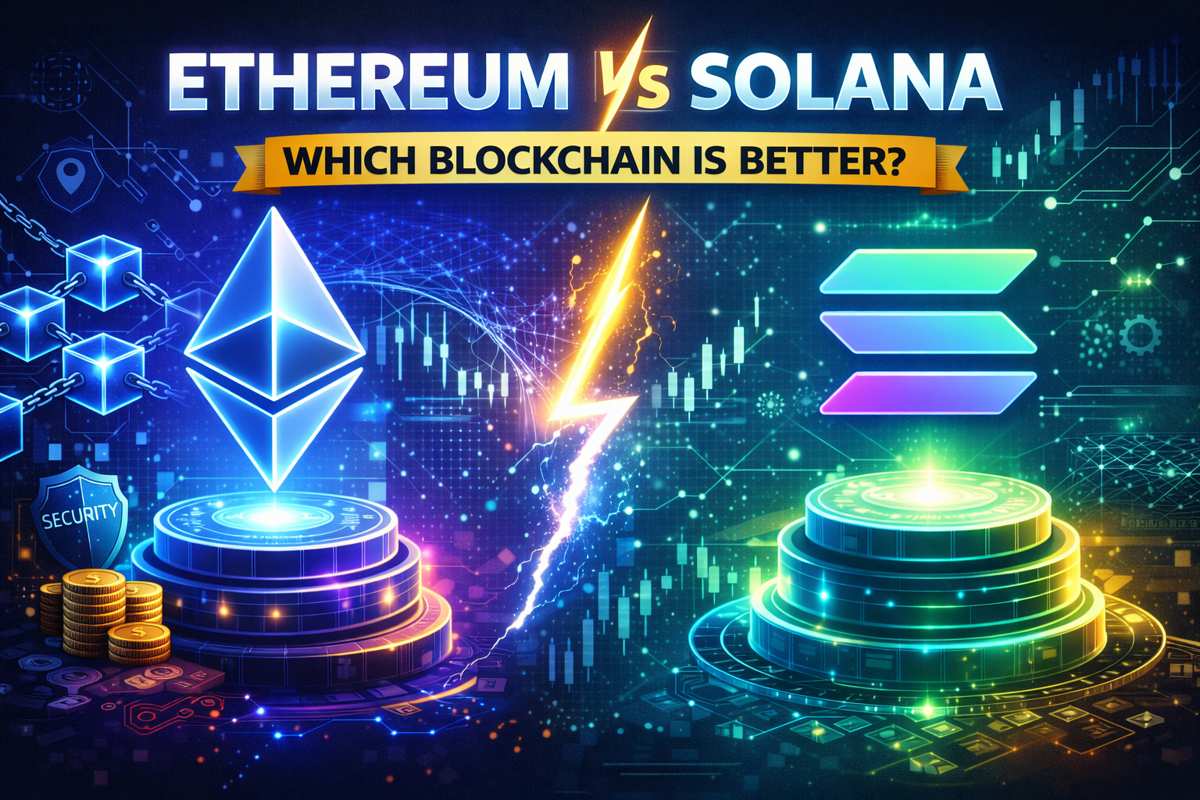
Blockchain technology has evolved rapidly, and two of the most talked-about platforms today are Ethereum and Solana. Both are powerful, widely used, and supported by large developer communities—but they are built very differently and serve slightly different goals.
If you are a beginner, investor, developer, or tech enthusiast wondering which blockchain is better: Ethereum or Solana, this guide explains everything clearly, honestly, and realistically.
Rather than declaring a winner blindly, we’ll break down how each blockchain works, their strengths, weaknesses, real-world use cases, and who each one is best for.
What Is Ethereum?
Ethereum is a decentralized, open-source blockchain launched in 2015 by Vitalik Buterin and other co-founders. It introduced the concept of smart contracts, which allowed developers to build decentralized applications (dApps) directly on the blockchain.
Ethereum is often described as the foundation of Web3 because it pioneered:
-
Decentralized finance (DeFi)
-
NFTs
-
DAOs
-
Blockchain-based games
-
Token standards (ERC-20, ERC-721)
Ethereum’s Core Goal
Ethereum focuses on security, decentralization, and long-term reliability, even if that means slower speeds or higher fees.
What Is Solana?
Solana is a high-performance blockchain launched in 2020 by Anatoly Yakovenko. It was designed to solve one of blockchain’s biggest problems: scalability.
Solana is known for:
-
Extremely fast transaction speeds
-
Very low transaction fees
-
Support for large-scale consumer applications
Solana’s Core Goal
Solana prioritizes speed and scalability, aiming to support millions of users without relying heavily on secondary scaling solutions.
Key Technical Differences Between Ethereum and Solana
Understanding how these blockchains are built helps explain their strengths and trade-offs.
Consensus Mechanism
Ethereum: Proof of Stake (PoS)
Ethereum transitioned from Proof of Work to Proof of Stake in 2022.
How it works:
-
Validators stake ETH to secure the network
-
Blocks are validated based on stake, not computing power
-
More energy-efficient than mining
Strengths:
-
Highly secure
-
Environmentally friendly
-
Strong decentralization
Solana: Proof of History + Proof of Stake
Solana uses a unique system called Proof of History (PoH) combined with Proof of Stake.
How it works:
-
Transactions are timestamped before consensus
-
Validators process transactions in a predefined order
-
Reduces communication overhead between nodes
Strengths:
-
Extremely fast processing
-
Lower latency
-
High throughput
Transaction Speed and Scalability
Ethereum Speed
-
Average transactions per second: 15–30
-
During congestion, transactions can slow down
-
Layer-2 solutions (Arbitrum, Optimism, zkSync) improve speed
Ethereum relies on Layer-2 scaling, meaning much activity happens off the main chain but settles securely on Ethereum.
Solana Speed
-
Capable of thousands of transactions per second
-
Transactions finalize in seconds
-
No Layer-2 required for basic scaling
Solana’s speed makes it attractive for:
-
Gaming
-
NFT minting
-
High-frequency applications
Transaction Fees
Ethereum Fees
Ethereum transaction fees (gas fees):
-
Vary based on network demand
-
Can be low during quiet periods
-
Can become expensive during congestion
Layer-2 networks significantly reduce costs, but the main Ethereum chain can still be costly.
Solana Fees
Solana fees are:
-
Extremely low (often fractions of a cent)
-
Predictable
-
Ideal for frequent transactions
This makes Solana appealing for users who want affordability without complex scaling solutions.
Security and Decentralization
Ethereum Security
Ethereum is considered one of the most secure blockchains in the world.
Why:
-
Thousands of validators
-
Longest track record for smart contracts
-
Massive developer and auditor ecosystem
Ethereum’s conservative design reduces the risk of catastrophic failures.
Solana Security
Solana is secure but makes trade-offs:
-
Fewer validators than Ethereum
-
Higher hardware requirements for nodes
-
Past network outages during high load
Solana continues to improve stability, but Ethereum currently has a stronger decentralization profile.
Developer Ecosystem and Adoption
Ethereum Ecosystem
Ethereum has:
-
The largest developer community
-
Thousands of dApps
-
Most DeFi liquidity
-
The majority of NFT marketplaces
Popular platforms built on Ethereum include:
-
Uniswap
-
OpenSea
-
Aave
-
MakerDAO
Ethereum is the default choice for many serious blockchain projects.
Solana Ecosystem
Solana’s ecosystem is younger but growing fast.
Strengths include:
-
Fast-growing NFT marketplaces
-
Gaming platforms
-
Consumer-focused apps
Popular Solana projects include:
-
Phantom Wallet
-
Magic Eden
-
Jupiter Exchange
Solana attracts developers who want speed and user-friendly experiences.
NFTs and Gaming
Ethereum for NFTs
Ethereum dominates high-value NFTs:
-
Established standards
-
Strong security
-
Trusted by major brands
Downside:
-
Minting fees can be expensive without Layer-2s
Solana for NFTs and Gaming
Solana is popular for:
-
Cheap NFT minting
-
Fast in-game transactions
-
Large-scale user activity
This makes Solana attractive for mass adoption and gaming-focused projects.
Network Stability
Ethereum Stability
Ethereum:
-
Rarely goes offline
-
Handles upgrades cautiously
-
Prioritizes reliability over speed
This makes it suitable for financial infrastructure.
Solana Stability
Solana has experienced:
-
Temporary network outages in the past
-
Congestion issues during extreme usage
While improvements are ongoing, stability remains a key discussion point.
Ethereum vs Solana: Side-by-Side Comparison
| Feature | Ethereum | Solana |
|---|---|---|
| Launch Year | 2015 | 2020 |
| Consensus | Proof of Stake | Proof of History + PoS |
| Speed | Moderate | Very fast |
| Fees | Variable | Very low |
| Security | Extremely high | High |
| Decentralization | Very strong | Moderate |
| Ecosystem Size | Massive | Growing fast |
| Best For | DeFi, infrastructure | NFTs, gaming, consumer apps |
Which Blockchain Is Better?
The honest answer: it depends on your goal.
Ethereum Is Better If:
-
You value security and decentralization
-
You are building long-term financial applications
-
You want access to the largest Web3 ecosystem
-
You prefer proven, battle-tested infrastructure
Solana Is Better If:
-
You need high speed and low fees
-
You are building consumer apps or games
-
You want smoother user experience
-
You prioritize scalability without Layer-2s
The Bigger Picture: Coexistence, Not Competition
Ethereum and Solana are often compared as rivals, but in reality:
-
They solve different problems
-
They serve different audiences
-
They will likely coexist, not replace each other
Just as mobile apps and web apps both exist today, multiple blockchains can thrive together.
Final Verdict
Ethereum remains the most secure and decentralized smart contract platform, while Solana excels in speed, affordability, and user experience.
Neither is “perfect,” but both are pushing blockchain technology forward in meaningful ways.
Understanding their differences helps you make better decisions as a user, investor, or developer.