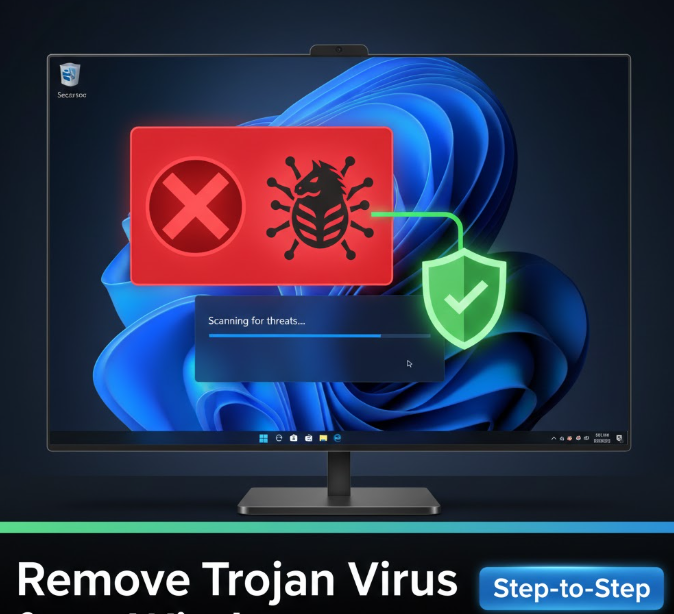
A Trojan virus is one of the most dangerous types of malware that can infect your Windows computer. Unlike regular viruses, Trojans often disguise themselves as legitimate software, tricking users into installing them. Once active, they can steal personal data, slow down your PC, display unwanted ads, or even give hackers remote access.
The good news is that with the right steps, you can detect, remove, and protect your computer from Trojans. In this guide, we’ll walk you through safe, step-by-step methods for Windows 11, 10, and 7.
Signs Your Windows PC Might Have a Trojan
Before removing a Trojan, it helps to know if your system is infected. Common symptoms include:
-
Slow performance – programs lag or crash unexpectedly
-
Unexpected pop-ups or ads – even on sites that normally don’t show ads
-
Programs you didn’t install – unknown apps appearing on your PC
-
Disabled security software – antivirus or firewall turns off without reason
-
Unusual network activity – high data usage when idle
-
Strange files or folders – unknown files appearing in system directories
If you notice any of these symptoms, it’s time to take action immediately.
Step 1: Disconnect from the Internet
When dealing with a Trojan, the first step is to cut off internet access. This prevents the malware from sending or receiving data from hackers.
-
Disconnect your Wi-Fi or unplug your Ethernet cable
-
Avoid logging into accounts until your system is clean
Step 2: Boot into Safe Mode
Safe Mode loads only essential Windows programs, making it easier to remove malware.
Steps for Windows 10 & 11:
-
Press Windows + I to open Settings
-
Go to System → Recovery → Advanced startup → Restart now
-
After restart, select Troubleshoot → Advanced Options → Startup Settings → Restart
-
Press F4 for Safe Mode, or F5 for Safe Mode with Networking
Windows 7 users:
-
Restart your PC
-
Press F8 repeatedly before Windows starts
-
Select Safe Mode with Networking
Step 3: Run a Full Antivirus Scan
A Trojan can be removed using reliable antivirus software. Recommended tools:
-
Windows Defender (built-in)
-
Malwarebytes Free or Premium
-
Kaspersky, Bitdefender, or Norton
Steps:
-
Open your antivirus program
-
Update virus definitions
-
Run a Full Scan (not quick scan)
-
Follow instructions to quarantine or remove detected threats
Tip: Avoid installing multiple antivirus programs simultaneously, as they can conflict.
Step 4: Use a Trojan-Specific Removal Tool
Some Trojans are sophisticated and require specialized tools:
-
Malwarebytes Anti-Malware
-
HitmanPro
-
Emsisoft Emergency Kit
Steps:
-
Download and install the tool from the official website
-
Run a full system scan
-
Quarantine or delete any detected Trojan files
Step 5: Check Installed Programs and Browser Extensions
Trojans often install malicious programs or browser add-ons.
Steps:
-
Press Windows + R, type
appwiz.cpl, press Enter -
Look for suspicious or unknown programs
-
Select and click Uninstall
For browser add-ons:
-
Open Chrome, Edge, or Firefox
-
Go to Extensions/Add-ons
-
Remove anything suspicious or unfamiliar
Step 6: Clear Temporary Files
Deleting temporary files can remove hidden malware and speed up scans:
-
Press Windows + R, type
%temp%, and press Enter -
Select all files and delete
-
Empty the Recycle Bin
Optional: Use Disk Cleanup for a more thorough cleanup.
Step 7: Restore System Settings (Optional)
If a Trojan altered system settings:
-
Press Windows + R, type
rstrui.exe, press Enter -
Follow prompts to restore Windows to a previous restore point
Only do this if the Trojan hasn’t been completely removed, and ensure backups are in place.
Step 8: Update Windows and Software
Trojans often exploit outdated software. Update everything:
-
Press Windows + I → Windows Update → Check for updates
-
Update browsers and third-party apps
Keeping software up-to-date reduces the chance of reinfection.
Step 9: Change Passwords
After removal:
-
Change passwords for all online accounts
-
Enable two-factor authentication (2FA) for extra security
-
Use a password manager to generate strong passwords
Do this only after the Trojan is fully removed to avoid stolen credentials.
Step 10: Prevent Future Infections
-
Avoid downloading files from untrusted websites
-
Don’t click suspicious links or email attachments
-
Keep antivirus and Windows Defender active
-
Regularly backup important files
FAQ
Can Windows Defender remove Trojans?
Yes. Windows Defender is effective against most Trojans if updated regularly.
How long does it take to remove a Trojan?
A full scan and cleanup usually take 30–60 minutes, depending on system size.
What if my PC still behaves strangely?
Perform a clean install of Windows or seek professional help.
Are free Trojan removal tools effective?
Yes, tools like Malwarebytes Free can remove most threats, though premium versions offer real-time protection.
Can Trojans steal passwords?
Yes, many Trojans are designed to capture sensitive data, which is why changing passwords after removal is essential.
Final Thoughts
Trojan viruses are serious threats but removing them is possible if you act carefully. By following these steps—Safe Mode, antivirus scans, Trojan removal tools, and system cleanup—you can restore your Windows PC to a safe state.
Always keep your system updated, avoid untrusted downloads, and back up important files regularly to prevent future infections.